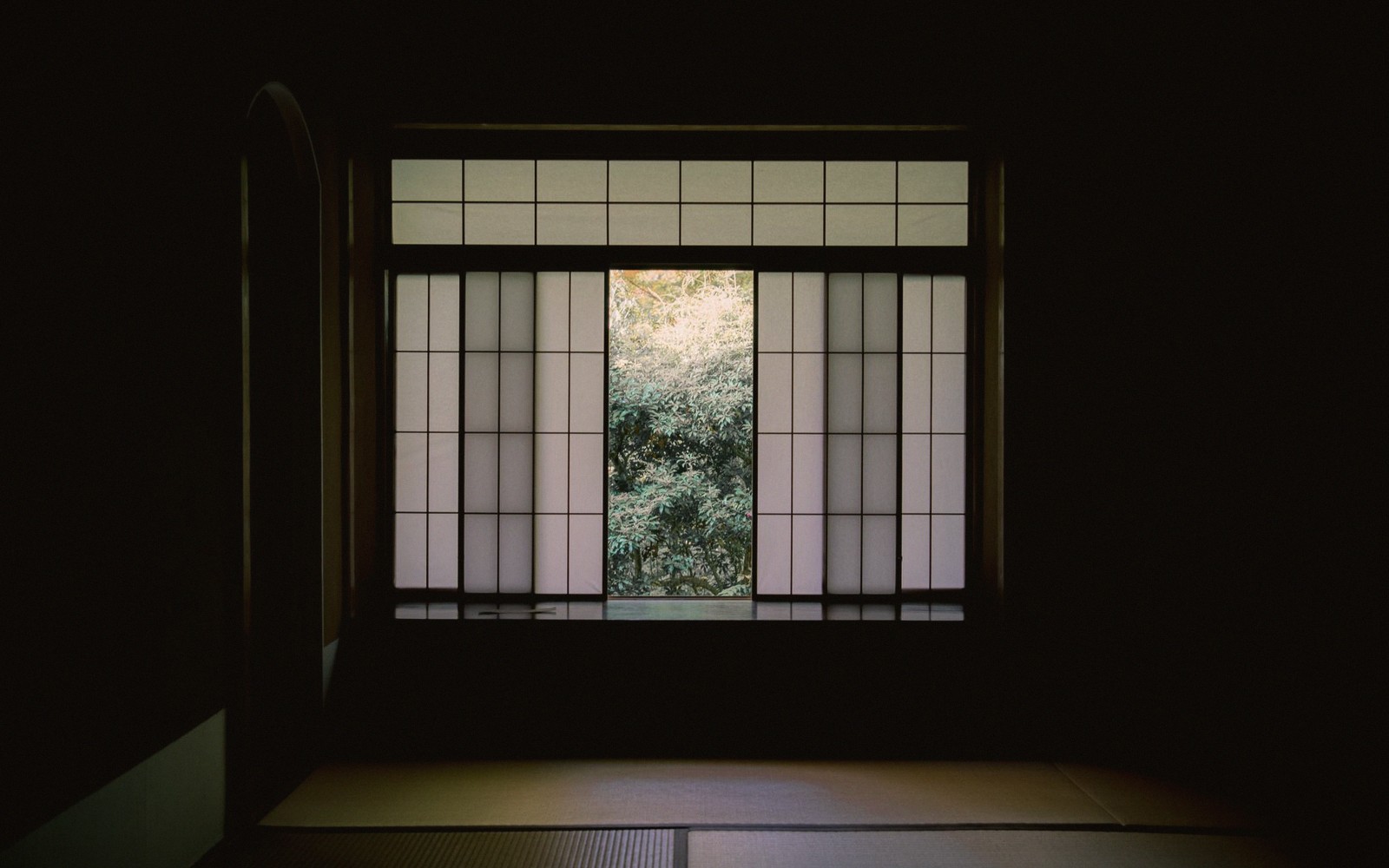
Fewer things, better placed — a note on arranging a home for calm.
OneWhat you keep, and where you put it
There is a principle at work in the most quietly beautiful rooms you have ever entered: nothing is accidental. Not the single ceramic bowl on the shelf, not the branch placed in the narrow vase, not the patch of wall left bare above the window. The effect feels effortless precisely because someone was deliberate.
This is not a style. It is closer to an attitude — one with deep roots in East Asian domestic culture, where the arrangement of objects in a room has long been understood as a form of practice. In the Japanese tradition, the tokonoma — the recessed alcove found in formal rooms — was never cluttered. A scroll, a flower, occasionally a small object of interest: one thing at a time, changed with the season, given room to be seen. The alcove taught a lesson the rest of the house could borrow. When an object stands alone, it becomes present. When twenty objects crowd a shelf, none of them is.
The Chinese scholar's studio carried the same understanding. A brush rest, an inkstone, a stone or root chosen for its interesting form: the wenfang — objects of the studio — were few, and their arrangement was itself considered an art. The space between things was not emptiness to be filled. It was part of the composition.
You do not need a tokonoma. You need the instinct behind one. Walk through a room and ask, simply, what you actually see — not what is there, but what registers. Most rooms are full of objects that don't register, because they are surrounded by too many others. Remove one shelf's worth of things and the objects remaining suddenly speak. This is not minimalism as ideology. It is editing as care.
Placement matters as much as reduction. A small handmade ceramic bowl set near a window catches light differently at different hours. A stone placed on a low table asks to be picked up. These are not decorating tricks. They are small invitations to notice, to slow, to be somewhere rather than moving through it.
The considered home is not a showroom. It may have worn edges, mismatched chairs, the evidence of actual life. What it has is intention — a sense that the people living there have thought about what they want to be surrounded by, and have had the discipline to remove the rest. That is a practice in its own right, and it compounds: a calmer room tends to produce calmer mornings.
The space between things was not emptiness to be filled.
scholar's studio (Chinese literati tradition)
the private study space of educated Chinese men, arranged for aesthetic and intellectual practice
Mentioned in this guide
- The scholar’s studioThe Chinese literati arrange a room for thought and beauty.
- Fewer thingsEach object kept must earn its place.
- Better placedSpace and emptiness do as much work as the objects themselves.