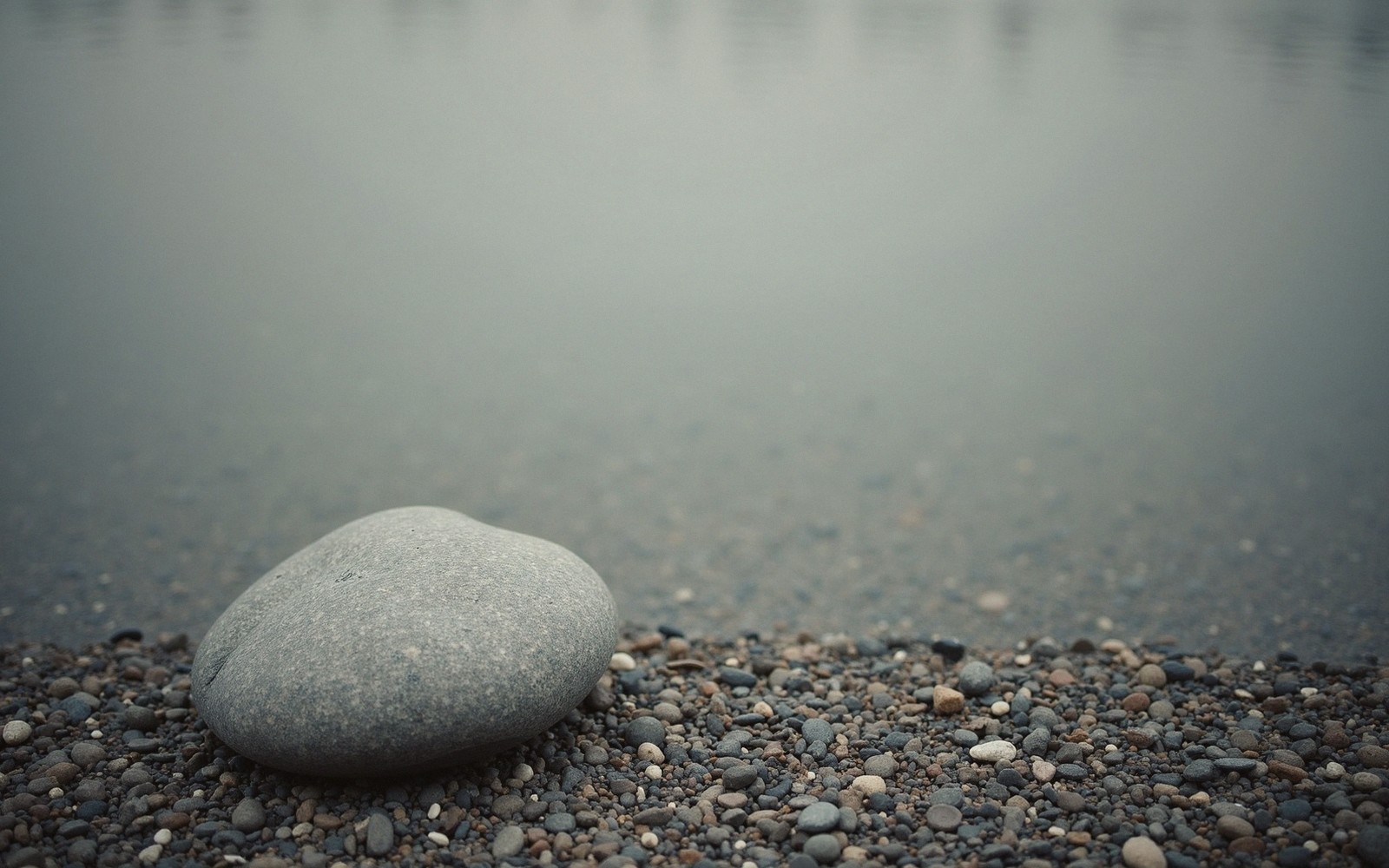
The most important part of a contemplative garden is the part that isn't there.
OneWhat the empty space actually does
Every tradition of Asian garden-making arrives, sooner or later, at the same insight: the spaces between things carry as much meaning as the things themselves. A single stone placed on raked gravel commands attention precisely because so much gravel surrounds it. Move five more stones in, and you haven't added meaning — you've diluted it.
This is not minimalism for its own sake. It reflects a philosophy of perception rooted in Taoist and Zen thought, where emptiness (mu in Japanese, wu in Chinese) is understood as active rather than absent. The pause in music, the white ground around a brushstroke, the still surface of a pond before anything disturbs it — these are not voids waiting to be filled. They are where attention gathers.
In the classic Japanese karesansui, or dry landscape garden, raked gravel stands in for water, and the mind is asked to complete the metaphor. Ryōan-ji in Kyoto, probably the most studied of these gardens, holds fifteen stones arranged so that no single viewpoint reveals all of them at once. The incompleteness is structural. It keeps the eye — and the mind — in motion. What is hidden matters as much as what is shown.
Water, when it does appear, works the same way. A still garden pool reflects sky, branch, and stone, effectively doubling the emptiness above it. The reflection is never quite reliable — it shifts with wind, with season, with the angle of an afternoon's light. That instability is the point. Permanence would close the question; impermanence keeps it open.
You do not need a historical garden to feel this. A bowl of water on a step, a single rounded stone on pale gravel, a strip of bare earth between two plantings — these are enough, if the surrounding space is honored rather than filled. The temptation in any garden, as in any room, is to keep adding. The contemplative impulse runs the other way: remove until only what is necessary remains, then sit with what that reveals.
The stone does not explain itself. The water does not argue. The empty space between them is where the looking — and, quietly, the understanding — happens.
The reflection is never quite reliable — it shifts with wind, with season, with the angle of an afternoon's light.
Ryōan-ji
Zen temple in Kyoto housing one of Japan's most celebrated dry landscape gardens
Mentioned in this guide
- The stoneA weighted, placed form the eye can rest against.
- The waterReal or raked in gravel — movement set around the stillness.
- The emptinessThe unfilled ground that makes everything else legible.