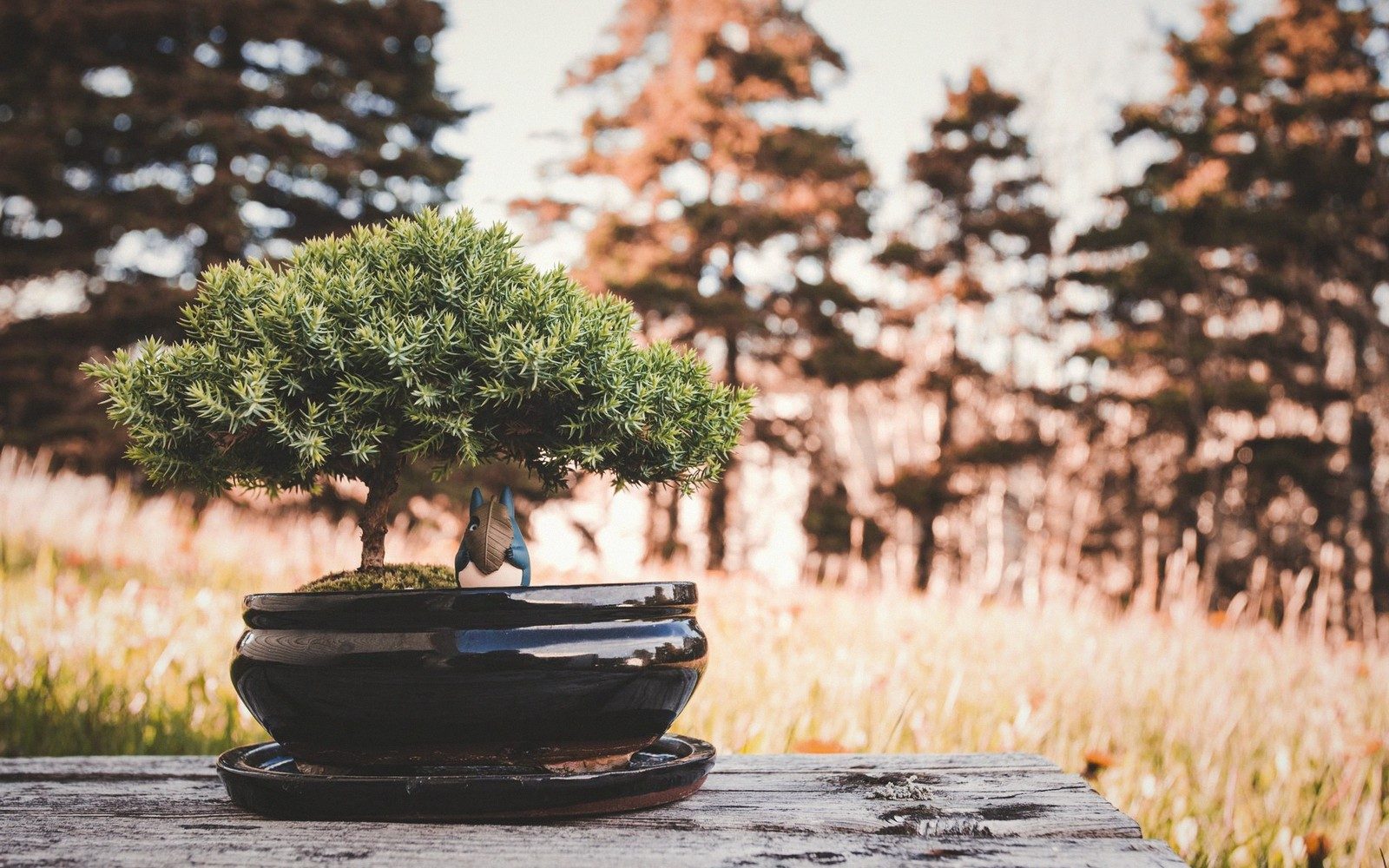
You don't need an acre — a balcony, a bowl of water, and a single stone can hold the same intention as an entire designed landscape.
OneStart with Less Than You Think
The Japanese garden tradition has always been comfortable with restraint. At its smallest expression — the tsuboniwa, a courtyard garden squeezed into the space between two walls — a few mossy stones, a lantern, and a single fern might constitute a complete composition. The principle isn't miniaturization for its own sake; it's that genuine attention, applied to a small space, is worth more than scattered attention across a large one.
A balcony, a windowsill, a corner of a concrete yard: these are enough. The question isn't what you have, but what you're willing to look at carefully.
Begin with one element. A shallow ceramic bowl filled with water and a stone — the water catches light and sky; the stone grounds it. That contrast, water and rock, stillness and reflection, is the same tension at the heart of the elements of a Japanese garden. Scale changes nothing essential.
TwoWhat Belongs Here
Choose each piece with the frankness of someone who has very little room to waste. Smooth river stone, a clump of bamboo grass in a terracotta pot, a low tray of raked sand or fine gravel — any of these carries weight. The raked tray takes minutes to tend each morning and offers something back: a mark of your hand, a trace of the day's mood, which you'll smooth away again tomorrow.
Moss, if your conditions allow it, rewards patience. It asks for shade, humidity, and the decision not to interfere. In return it ages beautifully, softening whatever it touches.
Avoid the temptation to fill the space. In contemplative garden thinking, empty space — ma in Japanese — is active, not passive. It lets the eye rest, and lets individual elements speak. Three things placed well will always outperform seven things crowded together.
It asks for shade, humidity, and the decision not to interfere.
ThreeThe Practice of Tending
A small garden is also a small ritual. Ten minutes in the morning — brushing debris from a stone, refreshing the water bowl, raking a new pattern in the gravel — is a form of attention that asks nothing complicated from you. It is simply presence, a little repeated contact with something growing and still.
This is where a garden earns the word calm. Not because plants are soothing in some abstract sense, but because tending them holds you, briefly and reliably, to the physical world. You are here. There is moss, water, stone. For now, that is sufficient.
Japanese garden tradition
horticultural and aesthetic practice with roots in Heian-period Japan, developed over centuries
Mentioned in this guide
- Roots · Heian JapanA tradition of gardens made to be dwelt beside, not merely seen.
- A cornerA balcony, a windowsill, or a single shallow tray of gravel.
- A stone, some waterOne weighted object and a still bowl of water are enough.