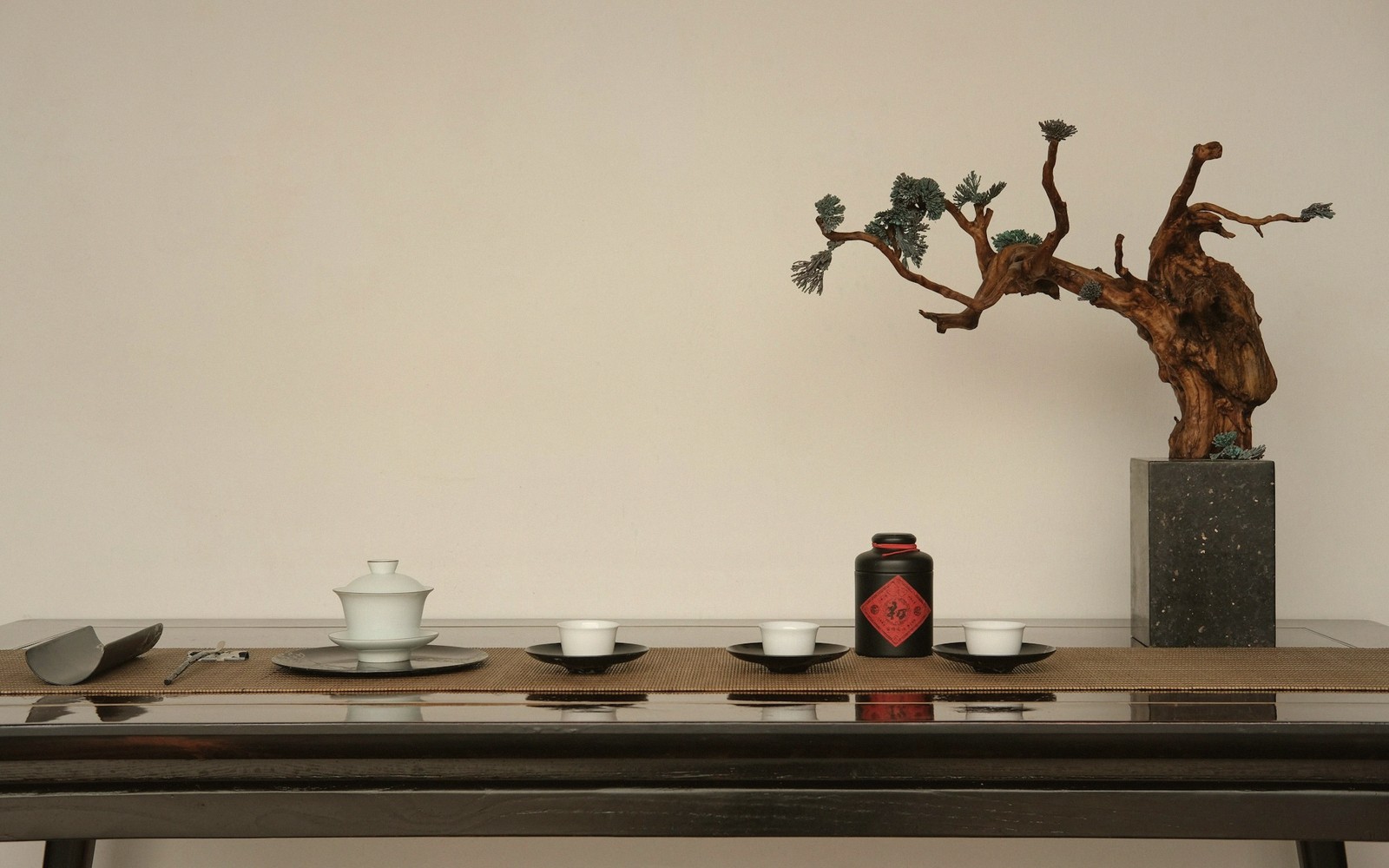
You don’t need a tatami room or a lacquered tray. A kettle, a cup, and a little unhurried attention are enough.
OneWhat the Japanese call chado
The Japanese phrase chado — the way of tea — carries more than the word “tea” alone. Cha is tea; do1 points toward a path, a practice, a way of moving through life with some degree of intention. The phrase arrived in its mature form through the Zen-inflected tea culture of the fifteenth and sixteenth centuries, shaped by the monk Murata Jukō and, most completely, by the tea master Sen no Rikyū, who died in 1591. Rikyū gave Japanese tea its still-recognisable character: small rooms, plain ceramics, a studied absence of ornament, a concentrated courtesy between host and guest.
But chado was never really about the ceremony. The ceremony was scaffolding — a way of holding a space in which something quieter could happen. What Rikyū pointed at is accessible in any kitchen on any ordinary afternoon, without robes or a scroll in the alcove.
This is not a mystical claim. It is a practical one. Attention changes experience. We know it from cooking, from walking in the rain, from the difference between a meal eaten alone with a screen and the same meal eaten with someone you love. Tea just happens to be a particularly good vehicle for the practice: small enough to hold in two hands, daily enough to reach for without ceremony, and complex enough — in flavour, temperature, scent — to reward genuine attention when you bring it.
TwoThe cup as practice
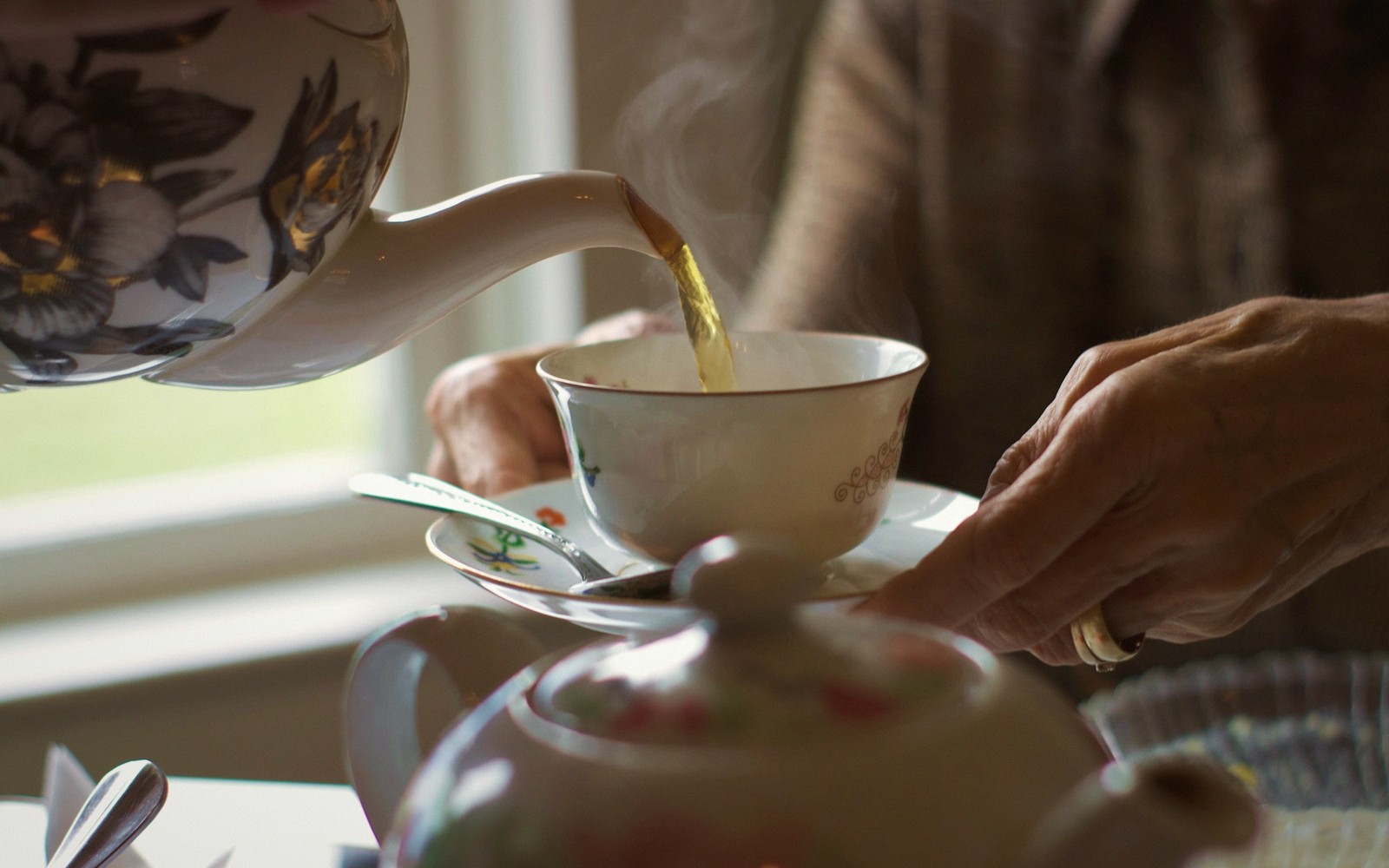
There is a sequence to making tea that, if you allow it, becomes a tiny meditation in itself. Not a solemn one — the mood is closer to tidying a shelf you love than to sitting on a cushion — but an exercise in being here, now, doing this.
Begin with water. Its quality matters more than most tea drinkers realise: heavily chlorinated tap water will flatten the subtlest leaves. Temperature matters too. The widespread habit of pouring full-boiling water over delicate green tea scorches the leaf and produces a bitterness the tea never intended. Japanese sencha2 opens best somewhere around 70–80 °C; a rolled oolong can take hotter water; a good pu-erh wants full heat. You don’t need a thermometer — you need the habit of noticing.
| Tea family | Water | In short |
|---|---|---|
| Green (sencha) | ≈ 75 °C | Well off the boil; a scorched green turns bitter. |
| White | ≈ 80 °C | Gentle heat, long and patient. |
| Oolong | ≈ 90 °C | Hotter as the roast deepens. |
| Black | ≈ 95 °C | Nearly there; forgiving of a minute more. |
| Pu-erh | ≈ 100 °C | Full heat; rinse the leaves first. |
The leaf itself is worth a moment of looking before it goes in. Smell it dry — grassy, roasted, mineral, floral, depending on its family. Green, oolong, and pu-erh each carry a distinct character, and recognising it begins before the water touches them. Then, steeping: the patience to let time do its work. Most people overbrew, not from carelessness but because they’ve wandered away. The simplest corrective is to stay.
| The scattered cup | The attentive cup |
|---|---|
| Boiling water, straight onto a green leaf. | Water rested a moment; the leaf met gently. |
| Brewed while three other things happen. | Poured, then watched — nothing else set going. |
| Drunk lukewarm, half-noticed. | Held in both hands, tasted as it cools. |
A cultural practice and a genuine pleasure — not a health claim, and not medical advice.
ThreeThe four principles Rikyū left behind
Rikyū is said to have named four principles at the heart of tea: wa (harmony), kei (respect), sei (purity), and jaku (tranquillity). These words have been printed on a thousand gift-shop pouches and can sound decorative. Sit with them a little longer and they turn practical.
Wa — harmony — is the idea that the parts of a moment should cohere: the tea chosen for the weather and your mood, the cup that suits the quantity, the pace that doesn’t rush the water or the drinking. Kei — respect — extends to the objects as much as the people; a way of handling a good ceramic that is simply the opposite of carelessness. Sei — purity — was less about hygiene than clarity: the cleared surface, the rinsed cup, the uncluttered mind. Jaku — tranquillity — is the outcome the other three make possible. Not blankness; a pause that has texture and warmth because it has been chosen and held.
You will never drink this exact cup again. You might as well be here for it.
The lineage behind those four words is short and human — a handful of people, across a couple of centuries, deciding that an ordinary act was worth doing well.
- c. 1422 – 1502Murata Jukō, a Zen monk, shapes the early Japanese tea gathering toward simplicity.
- Fifteenth–sixteenth centuriesJapanese tea culture reaches its mature, Zen-inflected form.
- Died 1591Sen no Rikyū defines the wabi aesthetic of chado — small rooms, plain ceramics, studied restraint.
Sen no Rikyū
Tea master · 1522–1591
Gave Japanese tea its enduring character: restraint, plain ceramics, and a concentrated courtesy between host and guest.
Historical figure
Murata Jukō
Zen monk · c. 1422–1502
Credited as an early shaper of the Japanese tea gathering, steering it toward quiet and simplicity.
Historical figure
FourMaking room for it
The most common obstacle to any small daily practice is not difficulty but displacement — the feeling that there is no space, no natural moment where it fits. Tea resists this objection because it is already there. Most people who would read these words already drink tea or coffee once or twice a day. The question is not whether to add a habit, but whether to let an existing one become slightly more itself.
One cup, once a day, made with full attention: that is the whole of the practice at its simplest. The idea of ichigo ichie3 — “one time, one meeting” — applies to the humblest cup as much as to the most formal gathering. The light will be different tomorrow. The leaf, from the same tin, will steep fractionally differently in water a degree cooler.
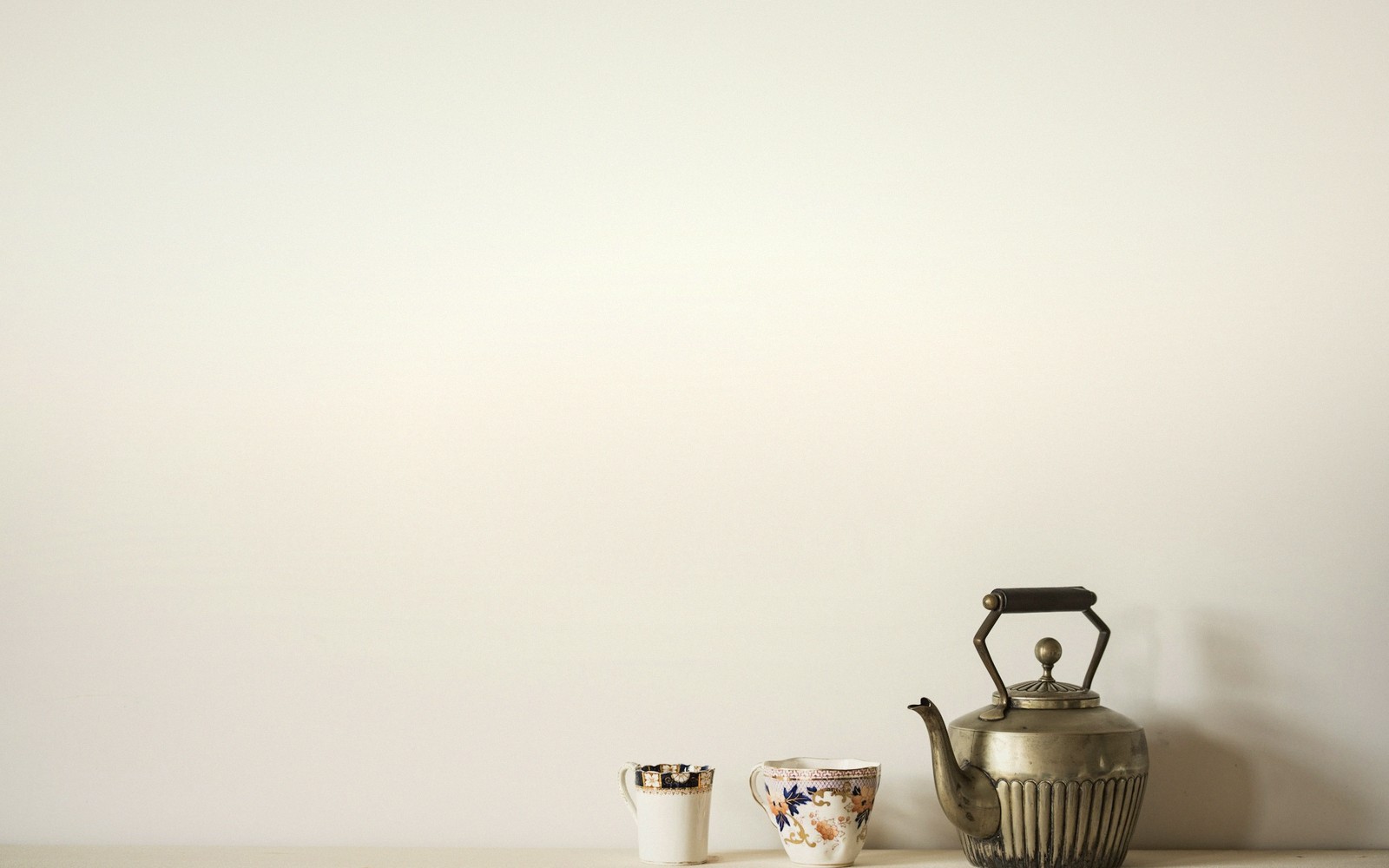
Where you make and drink it matters less than whether you bring yourself. A kitchen counter is fine; a small tray kept for the purpose is fine. What you are building, cup by cup, is not a collection but a reflex: the reflex of stopping, of using your hands for something unhurried, of tasting with the part of your attention that normally just scans. The heartland of this culture is easy enough to place on a map, but the practice belongs to any quiet kitchen.
Sen no Rikyū spent a lifetime building a philosophy out of this. You don’t need a lifetime — you need a kettle, a leaf worth tasting, and the willingness to do nothing else for five minutes while it steeps.