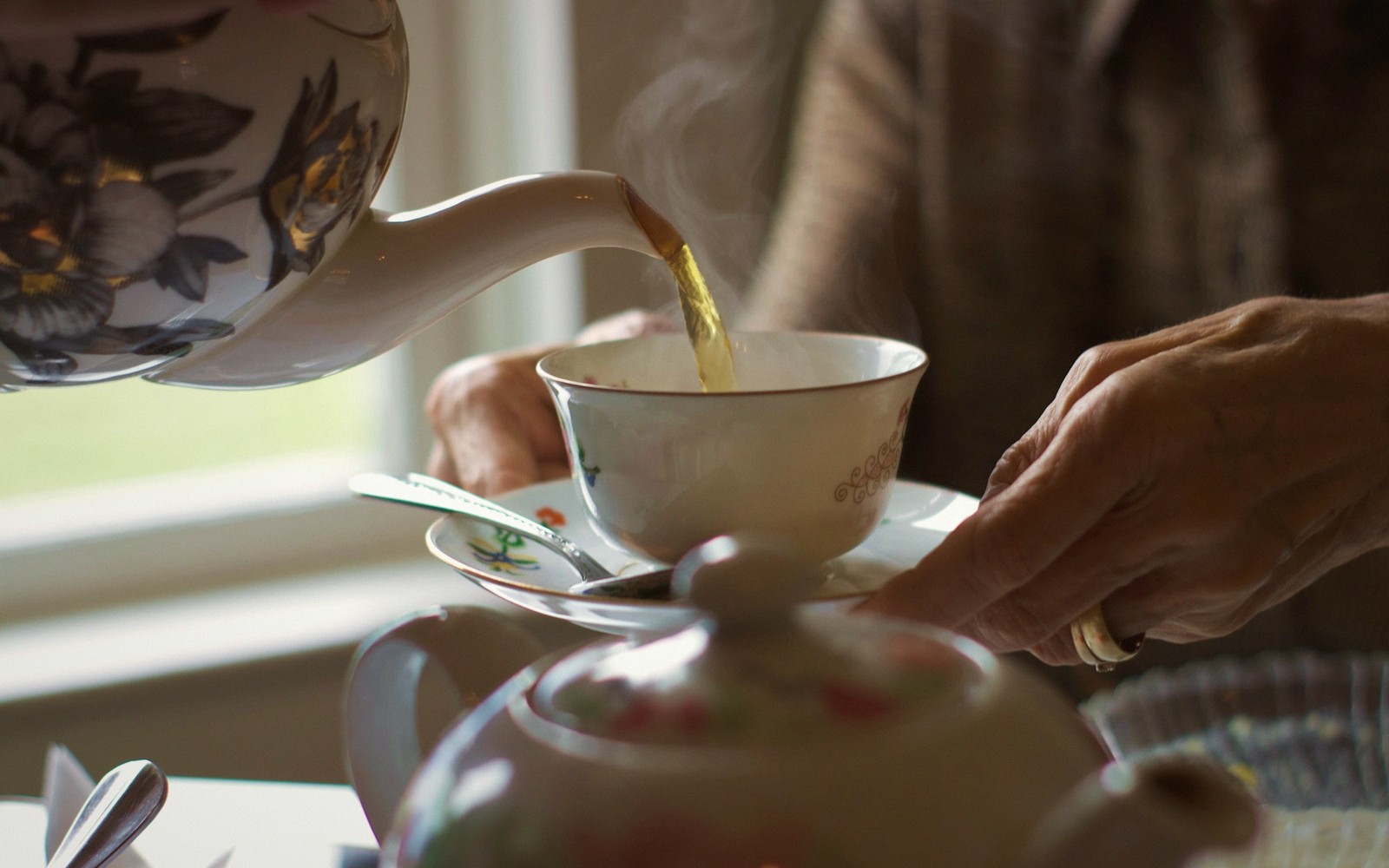
Water, temperature, time — the three variables that decide every cup, and how to learn them by feel.
OneWhat You're Actually Controlling
Most people who own good tea never taste it properly. The leaves are fine; the method is rushed. A handful of seconds at the wrong temperature, water drawn straight from a rolling boil and poured without thought — and a ten-dollar oolong tastes no better than a tea bag. The gap between a good cup and a disappointing one is almost never the tea itself. It is almost always water, temperature, and time.
These three things are not mysterious. They are learnable, and once learned, they become instinctive — the kind of quiet competence that lives in the hands and the nose as much as the mind. You don't need specialist equipment, and you don't need to time anything with a stopwatch. You need to slow down enough to pay attention.
TwoWater
Water is the medium the tea lives in, so its quality shapes everything. Heavily chlorinated tap water will flatten almost any leaf; filtered or bottled water with low mineral content gives the tea room to express itself. Water that is very hard — high in calcium and magnesium — can cloud a cup and mute delicate flavours. This is not fussiness. It is the same logic that applies to any cooking: you wouldn't use rancid oil in a dish that depends on oil.
Temperature matters more than most beginners expect, and it maps loosely onto tea type. Delicate green teas — a Japanese sencha, a Chinese longjing — are best brewed somewhere between 70 and 80°C. At a full boil they turn astringent, sometimes bitter, because excess heat extracts tannins faster than the sweeter, more volatile compounds. White teas are similarly gentle and reward water around 75–80°C. Oolongs vary widely with their oxidation level: a lightly oxidised oolong sits closer to green territory, 80–85°C, while a heavily roasted one can take water near boiling. Black teas and pu-erh are generally brewed at or close to 100°C — they are robust enough to want it.
You don't need a thermometer, though one is useful at first. Learn instead to read the water. Chinese tea culture historically described the stages of a kettle's heating by the size and behaviour of its bubbles: small bubbles forming on the base (around 70°C), larger bubbles rising in threads (around 80°C), a rolling full boil (100°C). Watch once with a thermometer to calibrate your eye, and after that the water tells you directly. Alternatively, draw boiling water and let it stand in an open vessel for one minute to drop roughly 10°C, two minutes for roughly 20°C. Imprecise, but workable, and the act of waiting is itself a useful interruption to hurry.
Alternatively, draw boiling water and let it stand in an open vessel for one minute to drop roughly 10°C, two minutes for roughly 20°C.
ThreeTime
Steeping time is where impatience most reliably ruins tea. Too long, and the same tannins that punish too-hot water begin to overwhelm a cup. Too short, and the character of the leaf never fully opens.
A useful frame: for most single-origin green and white teas, one to two minutes is enough — sometimes less for very tender leaves. Oolongs can go two to three minutes, depending on leaf style. Black teas brewed Western-style generally need two to four minutes; brewed gongfu-style in a small vessel, with more leaf and much less water, fifteen to thirty seconds per pour is common. Pu-erh, especially aged shou, is forgiving — it can take longer steeping without bitterness and rewards it with depth.
But these are starting points, not rules. The honest method is to taste as you go. After a minute, take a small spoonful. Taste again thirty seconds later. You are training yourself to notice where the cup is going — whether it is still opening or beginning to tip toward astringency. Do this a few times across a few sessions and the memory embeds itself. You stop needing to count.
Hangzhou
city in Zhejiang province, China; famous origin of longjing green tea
Mentioned in this guide
FourThe Third Thing, Which Is Attention
There is a reason that the way of tea has been considered a contemplative practice across cultures — not merely in the formal sense of chado or gongfu, but in the simpler sense that making tea well requires you to be present. You have to notice the water. You have to smell the leaf before it steeps. You have to taste without distraction.
This is not a philosophy. It is a practical observation: the people who brew the best cups are the ones who are paying attention. The attention itself is part of what makes the practice valuable, separate from the tea in the cup. A few minutes of genuine focus on something sensory and unhurried turns out to be a meaningful pause in an otherwise fast day.
None of this needs to be elaborate. A single good pot, water you've taken a moment to heat correctly, and the patience to let the leaf find its time — that is enough. The cup will taste like it.
- First — the waterFresh and filtered, brought just off a rolling boil.
- Then — the temperatureCooler for green; hotter as the leaf grows darker.
- Last — the timeShort at first, then longer with each patient re-steep.