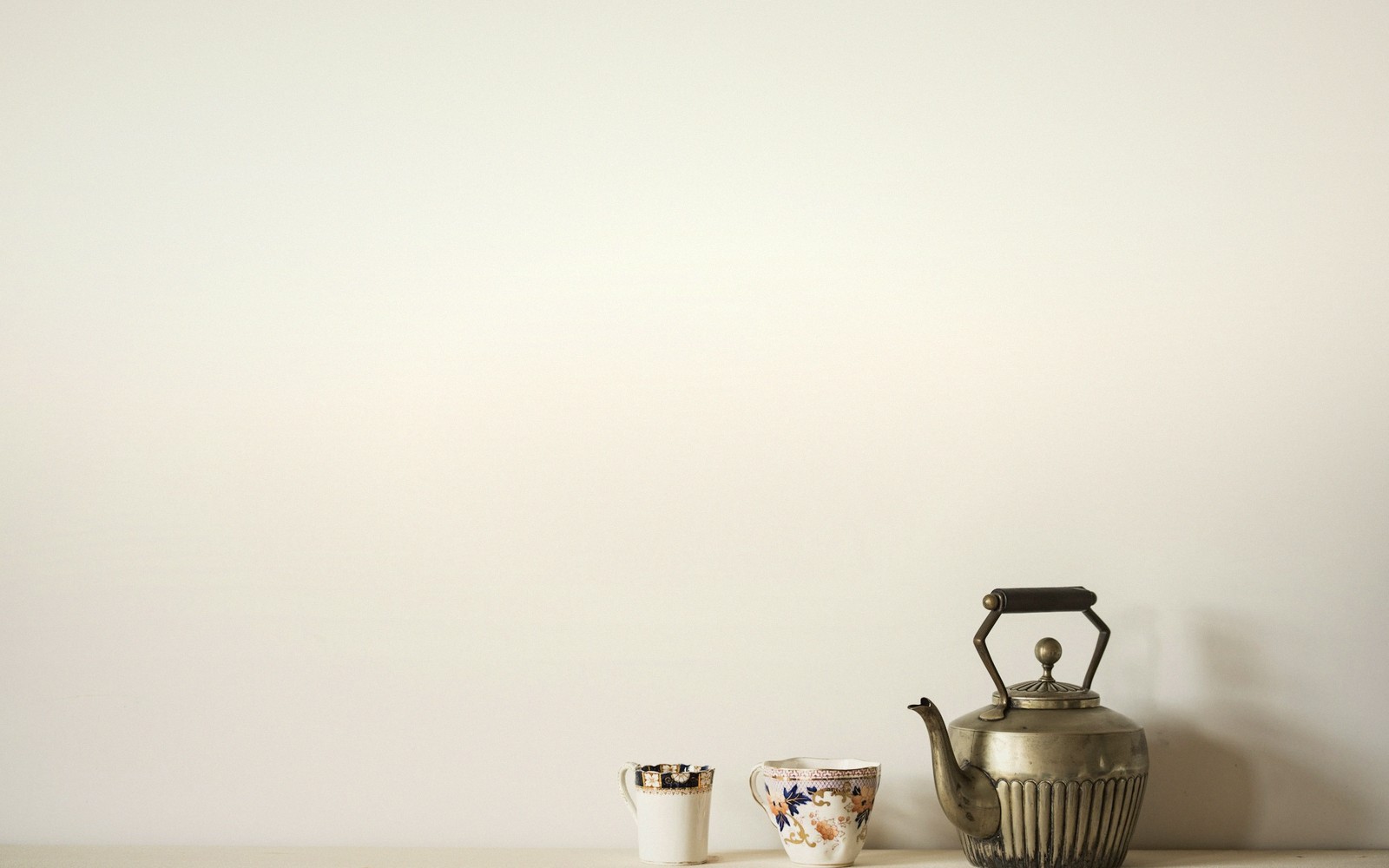
A small, honest shelf — the pot, the cups, and nothing you don't need.
OneStart with less than you think
The ceramics market will sell you a great deal of equipment in the name of authenticity. Most of it is optional. What actually matters fits on a single shelf, and for many teas, on a single tray.
A small pot comes first. For oolong or pu-erh, an unglazed Yixing pot — fired from the purple-brown zisha clay of Jiangsu province — is the traditional choice, prized because the clay is slightly porous and gradually seasons with the tea. For green teas, a glazed porcelain pot or a simple Japanese kyūsu keeps the brew clean and cool. Neither needs to be expensive; it needs to fit comfortably in both hands and pour without dribbling.
Cups next. Small ones — the size that makes you slow down, because each pour is finished quickly and invites the next. Unglazed stoneware, celadon, white porcelain: all work. The only real criterion is that the cup feels good against the lip. A matched set is pleasant but unnecessary; a few cups that you've gathered over time, each slightly different, is its own quiet pleasure.
A vessel to catch overflow — a chá pán, a slatted wooden tray, or simply a shallow bowl — keeps the table honest. Boiling water is poured over the pot before brewing, the first rinse of the leaves is discarded, and things get a little wet. A surface that handles this gracefully makes the whole practice easier.
That's the working shelf: pot, cups, a place for water to go. Everything else — the tea picks, the timing scales, the dedicated water kettle with degree-precise settings — arrives later, if at all, and only if you find yourself actually wanting it. The mistake most beginners make is acquiring the atmosphere of a practice before they have the practice itself.
Begin with what allows you to brew tea attentively, and let the shelf grow slowly, the way a good habit does.
The only real criterion is that the cup feels good against the lip.
Jiangsu province
eastern Chinese province; home of Yixing, centre of zisha pottery
Mentioned in this guide
- StartA single small pot that fits the hands and pours cleanly.
- AddA few cups that feel right against the lip — matched or not.
- Keep dryA tray or shallow bowl to catch the overflow.
- Later, maybeEverything else — only if you find you actually want it.