Slower than a stroll, quieter than a hike — the practice of going nowhere, attentively.
OneThe Walk That Asks Nothing of You
Most walking has a destination. Walking meditation has only the walking.
The practice appears in Buddhist, Taoist and Zen traditions under various names — kinhin in Japanese Zen, kinh hành in Vietnamese temple practice — and the instruction is almost laughably simple: walk slowly, feel each step, let the breath settle into the rhythm of movement. That's it. There is nowhere to arrive.
In Zen monasteries, kinhin is typically practised between periods of seated zazen, pacing the meditation hall in a tight, deliberate circuit. Each step covers roughly half a foot's length. Hands are held in shashu — one fist lightly wrapped by the other hand, held at the chest — and the eyes rest softly on the floor a few feet ahead. The pace is slow enough that you feel the heel make contact before the ball of the foot rolls forward, a small event that passes unnoticed a thousand times a day until you are actually paying attention to it.
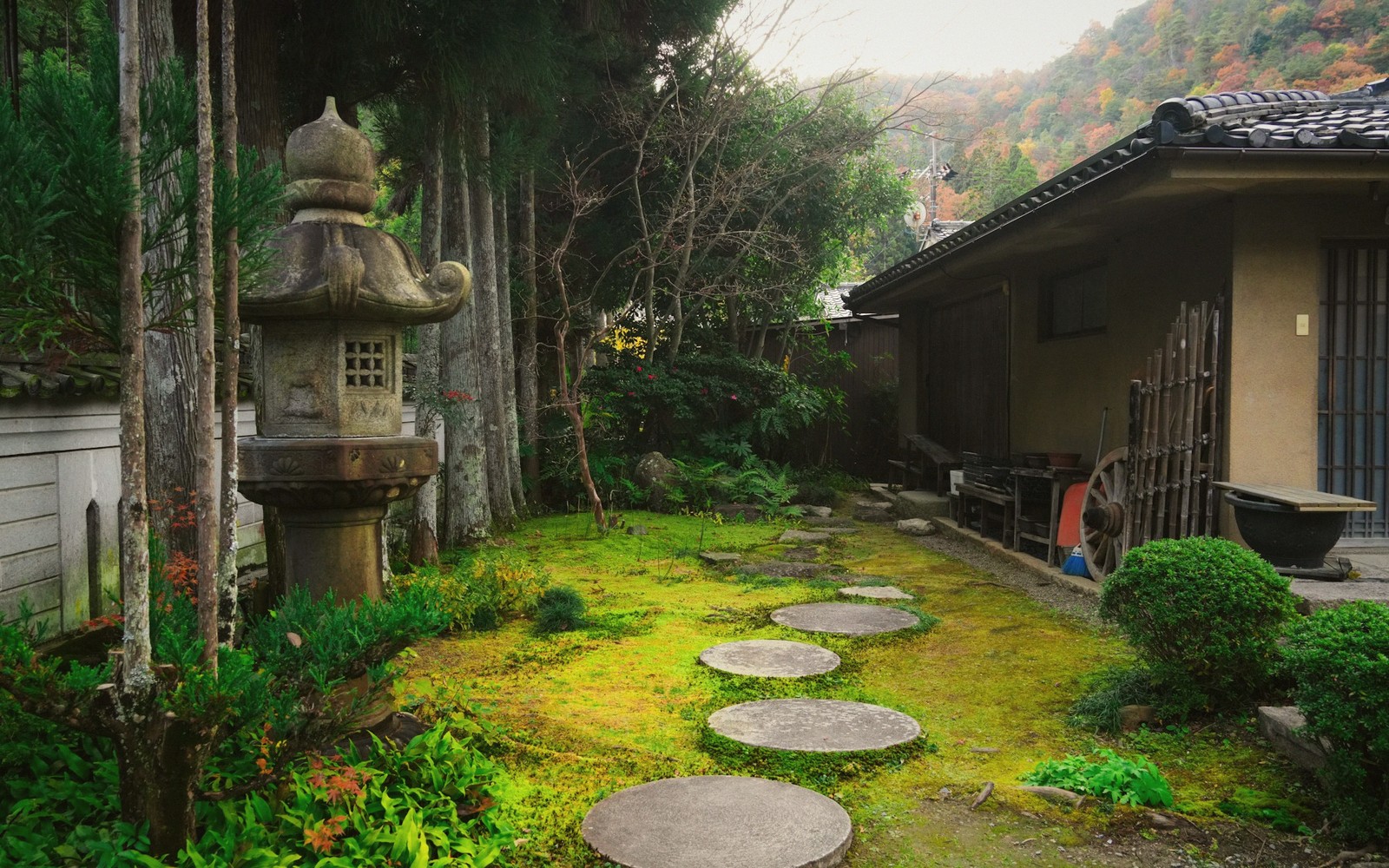
Outside the monastery, the practice loses none of its value when it loses the formality. A strip of garden path, an empty room, a quiet stretch of street at an early hour — all of these serve. Twenty steps in one direction, a deliberate turn, twenty steps back. The destination is irrelevant; the quality of attention is everything.
What walking meditation asks of the body is different from stillness. Sitting with the breath can feel like a discipline imposed from outside. Walking is already something the body knows, already a collaboration between balance, muscle and ground. That familiarity makes the practice oddly forgiving: when the mind drifts, the next footfall brings it back. The step is always there.
Begin with five minutes. A shorter walk done with full attention is worth more than a longer one on autopilot. Shoes off, if the ground permits. No destination, no music, no phone. Just the ordinary fact of a body moving through space, met with something close to curiosity.
What walking meditation asks of the body is different from stillness.
Vietnamese Buddhist tradition
one of several East Asian traditions practising formal walking meditation
Mentioned in this guide
Written as living culture and personal practice — not medical advice, and not a therapeutic claim.
- StandLet the weight settle evenly into both feet.
- StepSlower than a stroll — one small movement at a time.
- TurnAt the path’s end, pause, and quietly go back.